The court scholar serving Hermann of Thuringia.

The court scholar serving Hermann of Thuringia.
The scholar
Showing posts with label occupation. Show all posts

2023/09/23

Israel/Palestine for the last several years


From March 2009 to June 2021, Benjamin Netanyahu was Prime Minister of Israel. His policies can be described as continuing the policies that were in place when he came in, slowly squeezing the Palestinians in general. Gaza in particular has been under siege for 17 years. Hamas took control of Gaza in 2007, Fatah/Palestinian Authority (PA) took over the West Bank at the same time. Over the years, Gaza has been controlled solidly by Hamas, the West Bank has been increasingly cut up by walls and checkpoints. PA authorities cannot travel through Israeli checkpoints at will. Their travel permits can be revoked by Israel.

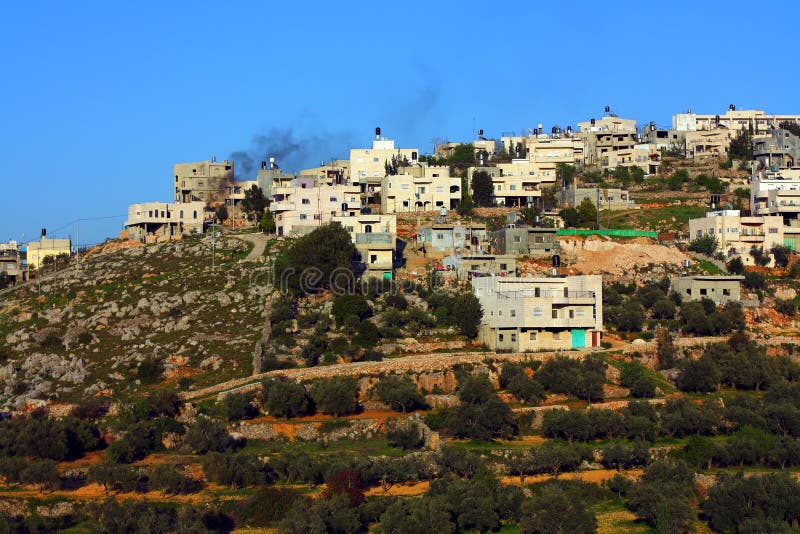
Israel’s military occupation of the West Bank entails onerous physical barriers and constraints on movement, demolition of homes and other physical infrastructure, restrictions on political rights and civil liberties, and expanding Jewish settlements that are widely considered to constitute a violation of international law.

For a short time, Netanyahu was replaced by Prime Ministers Naftali Bennett and Yair Lapid. In their coalition government, the United Arab List, with four seats, was able to get Bennett and Lapid’s coalition to majority status (The Knesset is 120 seats, so 61 is the magic number). The driving force behind the coalition though, was “personal animus for the Likud leader (Netanyahu) and the concern at the threat he may pose to Israeli democracy.”

One good thing that happened during Naftali Bennett’s brief tenure was that “budget money that had been approved by the previous government and earmarked for developing the economy and improving the infrastructure of Arab communities inside Israel’s Green Line borders, while combating rampant crime there.” Unfortunately, the Israeli Finance Minister under Netanyahu canceled that money.

Significantly though, the Israel-Palestinian peace process ran into a brick wall under Bennett with his “Six No’s,” which rejected BOTH a two-state solution AND a one-state solution! And of course, Bennet didn’t want to stop Israeli settlements on the West Bank. Settlements there are illegal under international law.

Israel, lacking a constitution, depends for separation of powers on informal arrangements. Netanyahu decided he wanted to remove “the power of the Supreme Court (and lower courts) to cancel government decisions deemed ‘extremely unreasonable.’" The reasonableness rule was summarily tossed out. Up to 200k Israeli citizens have been protesting on a regular basis ever since.

Some nights have turned violent – with police clashes, counter-protests and cars ramming into the crowds. It can feel like the country is unraveling.

Netanyahu addressed the UN General Assembly anyway.

Israel and Saudi Arabia in talks right now.

The Palestinian BDS National Committee (BNC) stands with the majority of the fraternal people of Saudi Arabia in its overwhelming condemnation of the normalization efforts between the Saudi dictatorship and apartheid Israel.

One of the big events lately has been the Jenin raid. It was the most devastating strike on the Jenin refuge amp in about 20 years. Israelis say they need to “clean out” the camp regularly, otherwise terrorists gather there. Several Israelis died in the battle as well. Israelis claimed that terrorists had been living in the camp and used the civilians there as cover after committing raids in the vicinity. The camp also saw fighting back in 2002. But Israel’s response punishes every resident who’s in the vicinity, thereby again, violating international law.

As various folks have pointed out, Is Israel defending a pure and true democracy? Ehh, depends on which ethnic group you’re talking about. Israel practices apartheid, so it’s only democracy if you’re speaking of the Jewish population, not if you’re speaking of Palestinians. 

--------

Christian-Jewish Allies – I meet regularly with this group. We have an active mailing list on everything affecting Palestinians.

Combatants for Peace – Members of this peace group have spoken at FUMCOG a few times.

Al-Bustan Seeds of Culture – Arab arts, including writing, dancing, singing. I attended an outdoor festival with short film clips of theirs a few months ago.

2022/08/05

Amnesty Internation & Ukraine

 Reuters:

Agnès Callamard, Amnesty International's secretary general...called on the Ukrainian government to ensure that its forces were located away from populated areas or for all civilians to be evacuated from those areas first.

I dunno, that seems pretty difficult. Recall that Russia attacked Ukraine from several directions in February and that they’ve fired missiles so that they land all over the country. A real problem with the Amnesty report is that Russians hits civilian targets all the time. 

Balloon Juice blog:

Ukraine responds strongly to criticisms by Amnesty International.

Russian abuse of civilian populations (example: Bucha) means many Ukrainian civilians feel more secure being close to their military.

Amnesty deliberately ignored the opinions of their Ukrainian staff.

The Secretary General of Amnesty International gives a very highly defensive reaction to being criticized.

President Zelenskyy takes very strong issue with Amnesty’s claim. 

And also:  

Russians distributing weapons and ammunition among civilians in the city of Kherson, in violation of the laws of war.


The BJ piece also looks at

Russian spies look for missile targets in Ukraine.

Brittney Griner’s fate.

2022/03/10

Difference between Ukraine and Palestine


A woman named Lizzy Savetsky complains that a fashion model in Vogue drew a parallel between Ukrainians and Palestinians. Her reasons for objecting to the comparison are 1. Russia did not invade Ukraine because Ukraine pose a security threat to Russia. True, Ukraine and Russia were engaged in active, if low-level hostilities since 2014, but the fighting was confined to the far Eastern edge of Ukraine. On the other hand, Palestinians have undertaken many types of attacks on Israel, using all manner of tactics and methods.

2. Ukrainians use very limited forms of violence. Again, true. Fighting in the Donbas has been through standard infantry, air and tank assaults.

3. Israelis have offered peace to Palestinians many times, all of which Palestinians have rejected. True. Palestinians don’t want to live in a “bantustan,” they want a fully independent state with borders they control. Israel feels that their security needs outweigh the need of Palestinians to have such a state.


What is the primary difference in the relationships between Russia and Ukraine versus that of Israel and Palestine? I think Russia-Ukraine had more of a Roman-type model of colonialism. When Rome acquired a colony, it would take over all of the government functions, would draft a portion of the men for its army and would collect taxes.

With “settler colonialism,” on the other hand, like what was practiced in South Africa, the colonists would take over individual parcels of land, pushing the indigenous population into bantustans or over into other countries. There are individual tribes or groups of Palestinians that are administered Roman-style, but others were pushed into Gaza or the West Bank and still others were pushed into neighboring countries, starting with what Palestinians call the “Nakba.”

Palestinians do not, at this time, have anything close to a viable state of their own. Gaza, ruled by Hamas, has been under siege conditions since 2007. Their every entrance and exit for travel and commerce is controlled by Israeli checkpoints. The West Bank isn’t in much better shape, split up into dozens of parcels, each one separated by walls and checkpoints.

It’s difficult to see how Palestinians could form a viable state out of these two parcels. Negotiations would have to produce serious changes in how Palestinian land is configured.

From Wikipedia: “There are also various economic and political restrictions placed on Palestinian people, activities, and institutions which have had a detrimental effect on the Palestinian economy and quality of life. Israel has said repeatedly that these restrictions are necessary due to security concerns ... The key obstacle therefore remains the Israeli demand for security versus Palestinian claims for rights and statehood."


2022/01/04

Letter to Philadelphia Inquirer

 Piece by Marc Thiessen


The 10 worst things Biden did in 2021” Jan 3

[Biden] showed weakness in the face of Russian aggression against Ukraine.”

When an America president (or any national leader, for that matter) considers military options, he has to “game it out” as far as possible and to consider the likely consequences. To make threats that we can't fulfill would be to invite a far worse catastrophe than to give up land that we're not prepared to go all-out to defend.

How many Americas are willing to give their lives for a free Ukraine? Could we really sustain a military supply line? Overconfidence and underestimating the difficulty of the job could lead to a far woes disaster than just looking weak. I suspect Biden and his team looked at those questions and decided the US simply wasn't ready for a war there. Biden's doing pretty well on this issue, keeping temperatures low and being open to discussions.


His withdrawal from Afghanistan was the most shameful foreign policy calamity in my lifetime”.

Casualties among Afghan civilians were steadily rising from year to year during both the Obama and Trump Administrations. Sure, the US military was in shape to continue to fight a war there, but the country of Afghanistan was suffering more and more damage all the time.

Former President Donald Trump reached an agreement with the Taliban (The official government of Afghanistan played no role in this agreement) a year before he left office, to reduce the number of US troops in the country to fewer than 9,000. The resulting force may have been enough to hold onto a small portion of Kabul, but any determined effort by the Taliban would have been sufficient to wipe out that modest contingent.

As South Vietnam suffered an abrupt collapse after years of American occupation and training and equipping , so too did Afghanistan. It was only due to Biden's better diplomacy that we were able to continue to get Americans and Afghan allies out of the country after the Taliban had taken all of the rest of Kabul.

Yes, a splinter group of ISIS attacked and killed some American troops, but had we not been actively talking with and working with the Taliban, our situation there could have ended up much worse.


2021/10/17

Latest on Palestinians

 Generally, we've heard about military-grade attacks on the Palestinian civilians of Gaza (Gaza has been run by Hamas since 2005) as various cutely-named “Operations.” Operation "Summer Rains" in 2006, Operation "Autumn Clouds" that same year, Operation "Hot Winter" in 2008, etc. But the conflict in May 2021 has never received a name. The
difference was that Israel didn’t expect Gaza to decide to join the conflicts going on around Jerusalem.

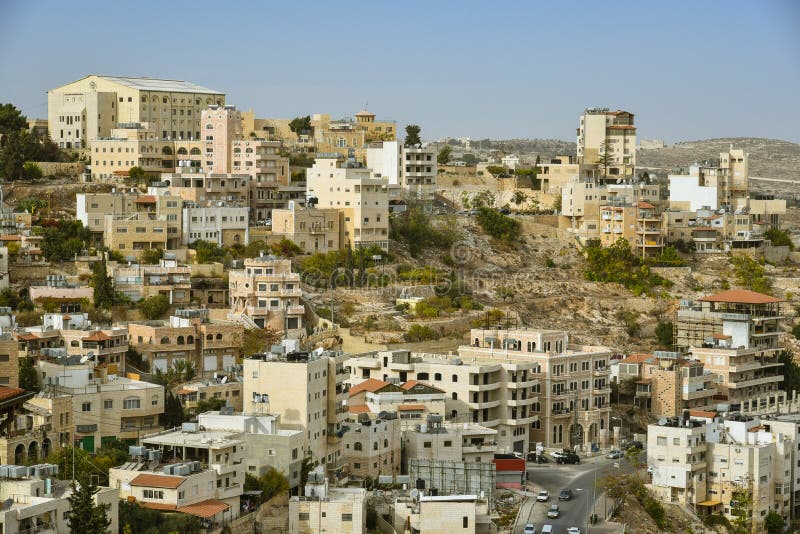
Cityscape of Bethlehem, Palestine. Aerial view of Bethlehem city, Palestine royalty free stock image

Sheikh Jarrah had six Palestinian families living in it. According to an Israeli law that we have seen many variations on over the decades since 1948, those families had to pay rent or otherwise acknowledge that Jewish Israelis were entitled to live there owing to the neighborhood having been previously occupied by Jewish families. This would be a
reasonably fair rule, but it's an entirely one-sided rule. Palestinians can't make any similar claims. The Palestinians of Sheikh Jarrah refused to make even symbolic concessions. despite the Israeli Supreme Court ruling against them.

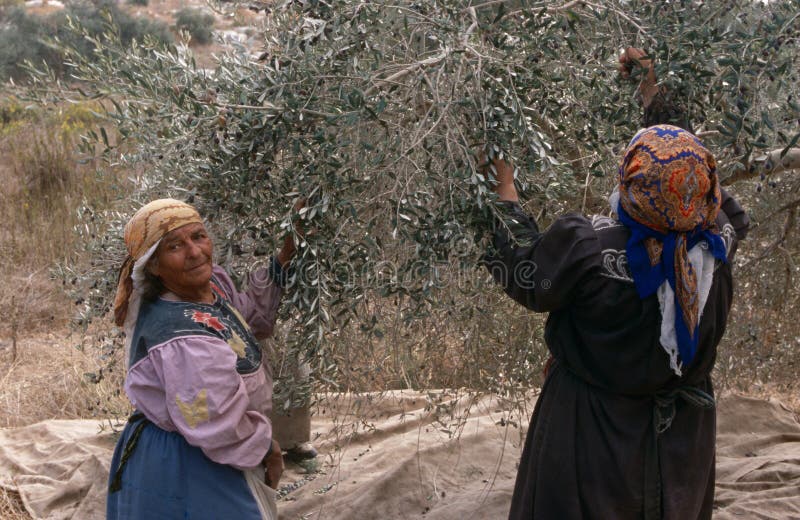
Palestinian women harvesting olives, Palestine

In a struggle that was going on at the same time and very close by, Israel was also trying to prevent Palestinians from 1948-occupied areas of Israel to attend a ceremony in the old city of Jerusalem at the Al-Aqsa Mosque. Hamas of Gaza decided to ally themselves with the residents of Sheikh Jarrah by demanding Israel withdraw from there and from the Temple Mount complex. They launched a barrage of rockets after Israel refused to budge. The one-sided battle (May 10 to 17) resulted in enormous damage to Gaza. Hamas launched 4,360 rockets towards Israel. As the rockets were small and unaimed, 12 Israeli civilians, including two children died.

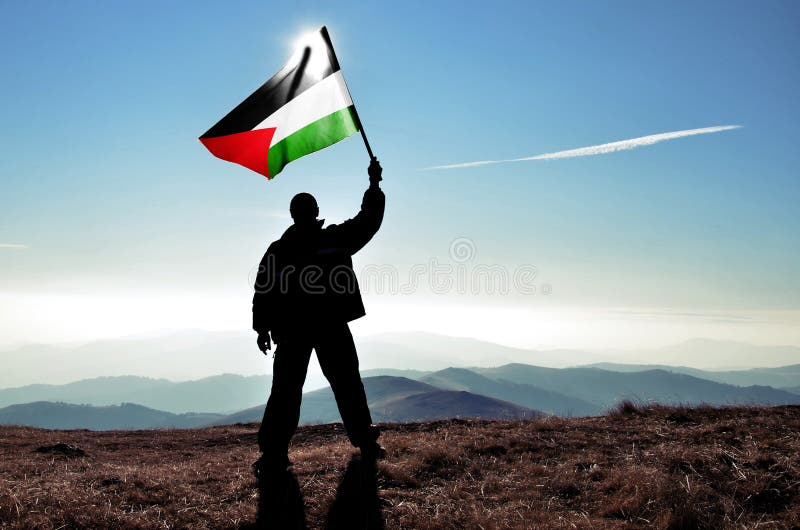
Successful silhouette man winner waving Palestine flag on top of the mountai. N peak royalty free stock image

The UN Relief and Works Agency (UNRWA), which provide direct relief and works programs for Palestinian refugees, discovered after Israeli bombs hit one of its schools, that Hamas had dug a tunnel underneath the school. The tunnel did not begin or end on the school grounds, but apparently just traveled underneath it. The tunnel was unknown to
civilians, meaning it was dug for military purposes. 

The war cost Gaza over 260 people, including 66 children and 41 women, and exacerbated previous traumas in particular among children. The World Bank estimated that up to US$380 million in physical damage and US$190 million in economic losses were caused.Recovery needs have been estimated up to US$485 million during the first 24 months. They also estimated that Gaza's GDP would contract by 0.3% in 2021 compared to an estimated 2.5% annual growth before the conflict.

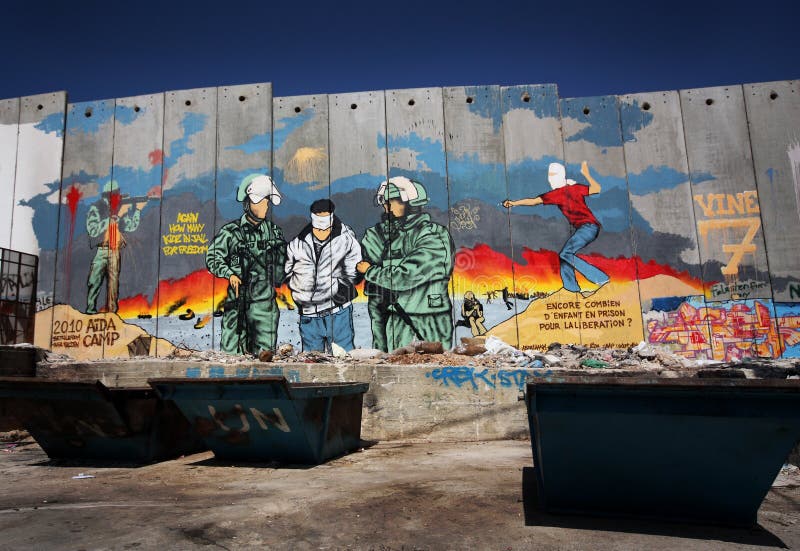
Segregation wall in Palestine

Four high-rise building in Gaza City were also destroyed. Israel warned inhabitants just before the strikes, so they had the chance to escape. Allegedly, the buildings were being used for military purposes, but there were several news agencies housed in one of them. One would think that reporters would have kept an eye out for people whose very presence
would be a danger to them. A quick search showed no updates, no Israeli defense of the attacks, meaning no one has provided evidence that any of the buildings contained any legitimate military targets.


A term that has been used for the political post-war time has been “habbet Ayyar” (May outburst). Palestinians inside Israel and Israel-occupied territory since 1948, with residents closing roads, throwing Molotov cocktails and putting up Palestinian flags in place of Israeli
ones. On May 12, Israel declared a state of emergency in Lydd for the first time since 1966 and imposed a curfew on the city as the war on Gaza began to unfold. Over 2,000 Palestinians had been arrested from then until early June. Palestinians were led by regular people within their own communities.

Palestine village on West Bank

A very serious result of the May conflict was that Congress wanted to send Israel $1 billion for the Iron Dome missile defense system that defends against Palestinian short-range rockets. For the first time ever, members of Congress refused to vote for a shipment of military goods to Israel The vote was very small, but was an ominous first. Currently, the
appropriation isn’t passed yet, Senator Bernie Sanders Is insisting that the Iron Dome appropriation be coupled with humanitarian aid for Palestinians. 

Senator Robert Menendez, chair of the Foreign Relations Committee, usually a strong supporter of Israel, says he’s “troubled” by reports of “innocent civilians” suffering at the hands of Israeli forces this past May. He assured Israel that he still supports them, but his statement is unusual and worth noting.

A Palestinian boy working in an olive grove, Palestine. A Palestinian boy at an olive grove in Palestine stock images

Turning to the question of Israel’s laws that permit Israel to seize properties that used to
belong to Jewish people, but do not permit Palestinians to seize properties that used to belong to Palestinians, we need to ask: “Is it antisemitic to protest such laws?” By protesting such an imbalanced judicial system, are we being insensitive to the Israeli need to survive as a Jewish state that’s surrounded by Arab states?


The NGO (Non-Governmental Organization) B'Tselem says Israel is practicing Apartheid. Human Rights Watch agrees. Both the Jewish Israeli population and the Palestinians who live within the boundaries of both Israel and the Occupied Palestinian Territories number 6.8 million each. If we insist that Israel must give equal right to Palestinians, then
isn’t that asking that Israel no longer be a Jewish state? Would such a demand be antisemitic as we’d be asking Israelis to give up something very precious to them or would it simply be asking for justice? After all, living under Apartheid is something no people would voluntarily do.

Sarah Silverman Calls Out Hollywood's 'Jewface' Problem | IndieWire

The Jewish comedian Sarah Silverman recently noted that progressives hardly ever mention Hamas. She identifies Hamas as a “terrorist” group and had some harsh words for them.


My own view on that is that I don’t think Israel draws any real distinction between Hamas, which runs Gaza, and Fatah, the Palestinian group that runs the West Bank. Both are under tight blockade by Israel, nothing and no one gets in or out without going through an Israeli
military checkpoint. Israel feels no obligation to let anything in that they have not approved. One could make the argument that since we’d like to see Palestinians have more unrestricted commerce with the outside world, that we’d “really” like to see the destruction of Israel and thereby, maybe we’re really just antisemitic. 


Our idea is that we need to draw a distinction between wanting to annihilate the Jewish race, y’know “Drive them into the sea” (that is, being antisemitic) and between being critical of the policies of the state of Israel, that is, criticizing Israel as though it were a regular country.


2020/08/24

Conversation on occupation of the South in the late 1860s

Reconstruction in Georgia | New Georgia Encyclopedia

Had a lengthy and interesting conversation on Facebook with someone who described himself as an amateur historian and appeared to be suggesting that Black people weren’t ready for emancipation in 1865.


He was initially upset by my posting a piece saying that Black Lives Matter people drove off a group of white supremacists, or in his telling, patriotic Georgians who were defending their heritage.


We discussed whether the Civil War was really all about slavery. I replied that yes, it was. As evidence, I supplied a link to the declarations of various Southern states in 1861 that made it very clear that, yes, slavery was the issue that was uppermost in their minds when the war commenced.


We got into a discussion about Black people in the South who died in the years immediately after they were freed from slavery.


Former slaves were left without any livelihood or means of support. They simply moved into the woods and lived a stone-age hunter-gatherer existence. According to a speech given by the Governor of Mississippi, it resulted in the death of one million blacks - dwarfing the combined deaths of Union and Confederate soldiers.

I first encountered this in one of Sierra Club founder John Muir's adventure books. He met such a family while on his thousand-mile walk from Indiana to Florida. His description is appalling.


He supplied a link to a piece that confirmed this after I searched around and found an author who confirmed that yes, perhaps a million Black people died during Reconstruction. He appeared to hint and suggest that Black people just weren’t ready for freedom by suggesting that it was the Emancipation Proclamation that killed them.


My own theory is taken from Carl von Clausewitz, who wrote On War. He lived from 1780 to 1831. The book was published after he died. He was a Prussian general in the Napoleonic wars. Basic idea of the book was that war is politics by another means. What this tells us is that the occupation that follows the fighting can be just as important to victory as the battlefield combat is.


Let’s start with the idea of “40 acres and a mule.” The single most profitable investment a Southerner could make was land and slaves. How much money were Southern landowners putting into land and slaves?


Since planters needed ever more funds to invest in land and labor, they drew on global capital markets; without access to the resources of New York and London, the expansion of slave agriculture in the American South would have been all but impossible.


So then, all of the sudden in 1865, all of the labor that plantation owners had purchased as an investment, walked off the job. Contracts are based on mutual advantage. Slaves weren’t getting any advantage, so there was no reason for them to stay on the job once the force that had been keeping them there was removed.


So the popular idea was to simply confiscate those plots of 40 acres from Southern landowners. That would most likely have required more force than Northerners were willing to deploy. When people who have lost a fortune are pressed further, they’ll strike back.


Now, if I were the George Marshall of the Lincoln Administration (See Marshall Plan of 1948) and was put in charge of planning the post-war reconstruction of the South, I’d give each freed slave money enough to purchase “40 acres and a mule.” That way, Southern landowners would get something out of the deal, even though they’d lose land and might switch to paying laborers as opposed to simply forcing them into working. If the former slave wanted to put money into industry instead, the US was starting up a really expansive phase of the Industrial Revolution, so there were plenty of opportunities there.


Why couldn’t the US do that? Lincoln was assassinated and Andrew Johnson, Lincoln’s vice-President, took over. Back in those days, the idea of getting a President and a Vice-President who were on the same page philosophically, the way Harry Truman agreed with Franklin Delano Roosevelt or that Lyndon Johnson agreed with John F. Kennedy, hadn’t really been developed yet. Andrew Johnson didn’t regard Black people as deserving of full civil rights.


Most importantly, Johnson's strong commitment to obstructing political and civil rights for blacks is principally responsible for the failure of Reconstruction to solve the race problem in the South and perhaps in America as well.


So, while the deaths of about a million Black people during Reconstruction is a really terrible thing, it’s not clear there was any obvious solution that the country was willing to accept.


2013/04/01

AQ & AQI

Excellent piece from FireDogLake on a WaPo columnist who makes several serious errors in history right off the bat. Jackson Diehl claims that the "United States faced down al-Qaeda and eventually dealt it a decisive defeat” Uh, no, it didn't Al Qaeda proper (AQ) was not al Qaeda in Iraq (AQI). AQI started as a separate organization under Abu Musab al-Zarqawi, who populated it with members of his old group and with jihadists who started migrating to Iraq in mid-2003 to join the fight against the American invaders of that country. Right-wingers in the US claimed that the US was following the "Flypaper" strategy, the idea of attracting jihadists from all over the Mideast and then successfully killing them in Iraq.


Problem was, most of the jihadists who went to Iraq would most likely have just remained in their home countries and most probably would not have done much of anything had the US not presented them with such an inviting target. There was simply never any evidence that anybody, neither already-active jihadists, nor members of AQ proper, were drawn into the "flypaper." Did AQ suffer any sort of defeat in Iraq? No, because AQ stayed out of Iraq. Sure, okay, AQI was defeated, but had the Iraq War never occurred, AQI would never have existed to begin with.

Diehl mentions that the Balkans under Clinton and Libya under Obama were successful interventions. True, but in both cases, there was a strong consensus as to the need for action and the US had many allies going in. Neither condition exists in Syria today, so I would be very considerably warier than Diehl is about going into Syria.


2013/03/25

Ten years ago. The Iraq War in retrospect.


One of Philadelphia's Gold Star Mothers, Celeste Zappala, was interviewed by WHYY on Tuesday, the 19th of March and the tenth anniversary of the start of the Iraq War. Zappala lost her son Sherwood Baker in 2004. He was the first National Guard member to lose his life in Iraq. During the Vietnam War, the National Guard was so safe a place to be that the future president George W. Bush signed up for a six-year tour (Notthat he even served the full six years), but in Iraq, the National Guard was a vital supplement to the regular armed forces. Presidential candidate Senator John Kerry (D-MA) charged in 2004 that by keeping National Guard troops in their billets longer than they had planned and by using them as regular forces, the Bush Administration didn't have to impose a draft or to increase the size of the regular armed forces, and thus that using the National Guard in that way amounted to a “back-door draft.” Recruitment for the military to keep enough troops fighting in Iraq was a problem. In 2007, the Army had to spend $1 billion in bonuses to recruit and retain the soldiers it had. The economic collapse at the end of 2007 made it a good deal easier to do keep the military fully staffed.

Why did the Bush Administration depend so heavily on the National Guard during the occupation of Iraq?

Much of the planning for the occupation of Iraq was improvised, last-minute and inadequate. The Bush Administration didn't appear to think that many forces or much money would be needed after Baghdad had fallen. The problem then was very ably sketched out by Colonel Harry G. Summers, who built upon the theories of Carl von Clausewitz concerning war and national determination. Colonel Summers' book was entitled “On Strategy: The Vietnam War in context” and it was written in response to the failure of the US to win over the Vietnamese people to the cause of America. The military in both Iraq and Vietnam did everything that was asked of it and it carried out its assigned task with enthusiasm and professionalism. In neither case can America assign any significant blame to the military for the inability of the US to win hearts and minds in the occupied country. The Iraqi insurgents certainly deserve a great deal of credit for making an American victory after the fall of Baghdad impossible. Had all gone according to the plans made by the Bush Administration and had Iraqis quietly accepted the American occupation, there would have been no need for Bush and his people to whip up American enthusiasm and support for the war.

As it was, the left wing was proven correct by the failure to find any WMDs and was thus completely uninterested in supporting the war and the right wing was perfectly happy to keep their activities in support of the war very sharply limited. The right-wing columnist Jonah Goldberg was asked why he didn't join up and go to Iraq in uniform (Goldberg was at the very upper age limit for joining the military). He later apologized for this response, but it's worthwhile to remember what he said:

As for why my sorry a** isn't in the kill zone, lots of people think this is a searingly pertinent question. No answer I could give -- I'm 35 years old, my family couldn't afford the lost income, I have a baby daughter, my a** is, er, sorry, are a few -- ever seem to suffice.

The point here is that Goldberg's attitude was quite typical for right-wingers. People who supported the war didn't feel the need to actually go over to Iraq and spend years in a foreign land actually getting themselves involved in learning a foreign language and dealing with a very different culture. Patriotism only demanded so much.

According to Summers, yes, any military or any country's political leadership can carry out short, brief military actions without getting broad-based buy-in from the country's civilian population, but any war that costs significant time and resources must get the civilian population emotionally involved. People must be absolutely convinced that the war is of immense significance and that it's worth great sacrifice to win it. Bush failed to get civilians from the right wing to go to Iraq as civilian reconstruction personnel, which explains why $8 billion of the money allocated to Iraqi reconstruction was lost. Without on-the-ground personnel overseeing projects and with Americans attempting to supervise projects from desks inside the “Green Zone” in Baghdad or from the US, it wasn't at all surprising that the US reconstruction effort was a complete flop.

Getting Americans motivated

The first step to getting Americans enthusiastically involved in the conquest/occupation of Iraq wassupervised by Madeleine Albright in February 1998. Albright brought several fellow war hawks to a town meeting in Ohio. It was a PR disaster as citizens vigorously questioned why Iraq was considered to be a threat and why that threat had to be neutralized via a war. Albright and her people were unable to answer these objections and the Clinton Administration didn't make any further attempts to whip up the public to supporting a war against Saddam Hussein and his country.

It's generally accepted among many former skeptics that no, President George W. Bush and VP Dick Cheney didn't arrange for 9-11 to happen, but the belief was based on solid facts. Bush and Cheney both had oil industry roots, there was good reason to believe that the US oil industry would profit enormously via an American occupation of Iraq and 9-11 occurred just a few years after Albright's failed attempt to get American citizen buy-in for a war against Iraq. Al Jazeera points out that safeguarding civilians was certainly not on the agenda of the invading Americans:

The Iraq invasion cannot be reasonably described as a case of "humanitarian intervention" for three reasons. The means used in the war - a "shock and awe" bombing campaign, including the use of cluster munitions in populated areas - were clearly not designed with the objective of safeguarding Iraqi civilians. Secondly, there was no evidence of the triggering mechanism for a humanitarian intervention, such as mass slaughter or crimes that shock humanity. Saddam had a terrible track record but, during the run-up to war, no such crimes were ongoing or imminent. Third, humanitarian motives were clearly not dominant, as the war would probably not have occurred in the absence of the issues of WMD and/or the al-Qaeda connection. During his February 2003 presentation to the UN, even Colin Powell's slides related to Saddam's human rights violations were labelled, "Iraq: Failing to Disarm". 


Even if regular people didn't buy that Iraq had something to do with 9-11, the Washington DC press corps certainly did. What we do know for certain is that Bush & Cheney manipulated the information suppled by America's intelligence agencies to make it appear that Hussein had something to do with 9-11. 

The deleted paragraphs in the summary called "Key Judgements" read:

"Baghdad for now appears to be drawing a line short of conducting terrorist attacks with conventional or CBW against the United States, fearing that exposure of Iraqi involvement would provide Washington a stronger cause for making war.
Iraq probably would attempt clandestine attacks against the US Homeland if Baghdad feared an attack that threatened the survival of the regime were imminent or unavoidable, or possibly for revenge."

Many on the right wing have made their defense of the Bush Administration center around the allegation that Democratic Senators had access to the same intel that Bush had and that they reached the same conclusion. No, Democrats had access to the intel that Bush edited to make it look as though Iraq was a threat.

As documented below, by the most scientifically respected measures available, Iraq lost 1.4 million lives as a result of OIL [Operation Iraqi Liberation], saw 4.2 million additional people injured, and 4.5 million people become refugees. The 1.4 million dead was 5% of the population. That compares to 2.5% lost in the U.S. Civil War, or 3 to 4% in Japan in World War II, 1% in France and Italy in
World War II, less than 1% in the U.K. and 0.3% in the United States in World War II. The 1.4 million dead is higher as an absolute number as well as a percentage of population than these other horrific losses.

The US absolutely must prevent anything like the Iraq War from ever occurring again. How are we doing on that? Unfortunately, not very well. The US leadership appears to greatly overestimate the effectiveness of sanctions, underestimates the usefulness of diplomacy and has far too much faith in our intelligence agencies. Also, people in Washington DC, both government officials and the press corps, appear to be talking about the deficit in much the same manner that they discussed Iraq in late 2002-early 2003. The good news is that US troops are very highly unlikely to go back into Iraq, no matter how badly the situation there deteriorates. The US couldn't do much there the first time and it seems our leadership knows that it couldn't do much on a return engagement. Could the US invade Iran? Certainly, elements want very badly to do so, but I think the public would be very highly likely to resist.

2011/09/30

The assault on the needs of regular people

In their "Abbreviated Pundit Round-up" Daily Kos today details a few of the many ways Republicans are trying to cripple the government so that it's unable to assist regular citizens. One of the items that makes no logical sense from the perspective of regular taxpayers/citizens is Amtrak. The Staggers Rail Act of 1980 freed railroad companies to focus on freight lines and to pretty much ignore passenger rail via the founding of Amtrak. Passenger rail wasn't all that profitable as people appeared to prefer either driving for shorter distances or flying for longer trips. 9-11 led to increasingly tight and inconvenient rules for air travel (I had to dispose of several bottles of liquids before getting on a plane a few years ago, and no, the expense wasn't huge, but it was quite annoying to have to do that) and it made for lengthy delays at airports. Not surprisingly, that's led to increased popularity for Amtrak.

With other countries having high-speed rail, that's made airplanes even less appealing as long and medium-distance transportation. Could the US simply turn rail back over to private industry? Probably, but as the linked piece indicates, freight lines aren't really compatible with the new high-speed passenger lines.


[Freight railway] owners worry that the plans will demand expensive train-control technology that freight traffic could do without. They fear a reduction in the capacity available to freight. Most of all they fret that the spending of federal money on upgrading their tracks will lead the Federal Railroad Administration (FRA), the industry watchdog, to impose tough conditions on them and, in effect, to reintroduce regulation of their operations.

Just seems to me that conservative/right-wing plans to destroy Amtrak would give America the worst of both worlds, we'd keep our annoying and inconvenient restrictions on air travel, but we wouldn't be able to just use Amtrak as an alternative. Would private service be cheaper? Probably, but that's not because private service is inherently better than government service. The main difference is that private lines could concentrate on medium-distance services of 50 to 500 miles and not have to worry about longer-distance lines of over 500 miles (The Boston to Washington Northeast Corridor is 440 miles long) whereas Amtrak has to run much longer-distance lines that run from California to Illinois or from Chicago to New Orleans. So yes, privatised rail service would see a big drop in costs for rail passengers, but those relatively few people who use long-distance passenger rail would get clobbered with either very expensive service or no service at all, being forced to go by air or having to drive.

Last night, I was at the public meeting that was considering an occupation of Philadelphia, modelled on the successful Occupy Wall Street action. As a traditional-news reporter was asking questions, it occurred to me that one of the major reasons I was so excited about it was that it pushes the Republican assault on government off of the front pages and that it drives the Republican/Tea Party-inspired drive for austerity and cutting the budget onto the back pages and out of peoples' view. If we can keep the attention of American citizens focussed on what we citizens need as opposed to what the plutocrats and oligarchs want, we're far more likely to succeed.

2011/06/02

I write letters

In response to the piece in FDL that showed that a Democrat is getting upset about the US having to leave Iraq by the end of this year, I wrote the following paper letter to him:


Representative Gary Ackerman
Ranking Member - House Foreign Affairs Middle East and South Asia subcommittee
218-14 Northern Boulevard
Bayside, NY 11361

Subj: Agreement to withdraw from Iraq – Please do not break agreement

Distinguished Representative Ackerman,

It's come to my attention that with the Iraqi refusal to request that American troops remain in their country past the agreed-upon deadline of the end of this year, that you have disagreements with the statement “Most Americans believe we’re done in Iraq.”

In late 2008, the US and Iraq agreed that the US would leave a country that American occupation has left in vastly worse shape than it was in when the US invaded it nearly a decade ago. There is no mission, as far as I'm able to determine, that remains to be accomplished.

I don't believe Republican propaganda on the issue of the budget and the deficit either, but they're screaming and hollering about the deficit and our President apparently takes their dire warning quite seriously. How can the Democratic Party take Republican talking points on the deficit seriously AND advocate that the US remain in Iraq for longer than we agreed upon staying?

Personally, I think the President should tell our troops in both Iraq and Afghanistan to stand down and not conduct any operations until the debt limit is raised. That would place our operations there in the proper perspective. Republicans want to get all panicked about Iraqi insurgents and the Taliban gaining ground, good! Let 'em get panicked! That would create some useful pressure to be responsible about the debt limit.

There's absolutely no reason to break our 2008 agreement with Iraq to leave their country. Please keep to the agreed-upon schedule for withdrawal.

2009/10/08

Views on the Afghanistan occupation

The leaders of Code Pink say that they have ascertained the views of Afghan women concerning continued US occupation of that country and the women there say they would prefer that US troops stay until an Afghan army is trained and armed and ready to provide them with security.

Mark Weisbrot of CEPR only mentions Afghan popular opinion by noting that "Five years ago, 70 percent of eligible voters participated in the Afghan presidential election. This year it was down to 38 percent." Even if Afghanis wanted US troops to remain, five years of occupation have seen a serious deterioration of the security situation.

Concerning the primary reason for being in Afghanistan, i.e., US troops are acting as a bulwark against al Qaeda, we might wish to keep in mind that "...Taliban elements have free reign in many areas of southern and eastern Afghanistan, yet the administration is contending that there are only an estimated 100 al-Qaeda operatives in Afghanistan."

How's the Afghan drug trade doing? Wel-l-l-l... "...the 13 provinces reckoned by Afghan and foreign observers to be largely under insurgent control, where poppy cultivation often extends to the outskirts of the government-controlled administrative centers and opium is sold in bazaars within a stone's throw of the governor's compound."

But the government is legitimate, right? Wel-l-l-l... Nasrine Gross says: "I have just returned from Kabul. And I am shocked how little the extent of fraud in the presidential elections is understood outside Afghanistan."

As much as I sympathize with Afghan civilians who want US troops to remain in their country, our troops need to leave Afghanistan yesterday!

2009/02/13

James Gilligan and the 3rd Presidential Debate

James Gilligan was in a front-line unit that headed into Iraq as part of the initial assault. His unit went all the way into Baghdad and then turned their responsibilities over to follow-on Coalition forces. The plan from that point was to "Reconstruct and reconstitute and rebuild the government from the ground up." Gilligan's unit rotated back to Camp LeJeune, within weeks he was sent on to Guantanamo Bay for a 6 month rotation in May of 2003. After six months in Cuba, he was deployed again for six months in OEF (Operation Enduring Freedom) in Afghanistan. His unit between May and November 2004 watched over a dam at an FOB (Forward Operating Base) and provided election security and other vehicle convoy operations on other FOBs. He then rotated back to "the real world." Six jobs and year and a half later he found himself down and out. In March 2008, he joined the IVAW veterans in a semi-formal panel of veterans of Iraq and Afghanistan in order to gather information on and speak out about the experiences of their deployments in the War on Terror, in an event that dubbed "Winter Soldier."

While taking part in the initial invasion of Iraq, traveling from Basra to Baghdad, Gilligan's unit didn't deal with any IEDs or any vehicle-borne IEDs, but his unit did deal with mortar attacks and snipers. His unit was expected to go in and, once Iraq was liberated, to go right out again. He emphasized how serious the chain of command was about how short the Iraq War was expected to be. He had a beret insignia with a picture of Saddam Hussein which he wasn't permitted to keep because he was told that all uniform items were to be confiscated and used for rebuilding the country and government.

He and his fellow Marines were not supposed to talk with reporters outside of the official mission parameters which others invoked. Some would badger the reporters and yet others would give reporters the "straight party line" of "everything's fine," "glad to be here," "glad to help."

Some would talk to reporters and then be incredulous as the reporters would focus on menial factoids about their personal lives. Reporters generally stayed away from details about the mission.

CEB Main (Combat Engineer Battalion Main) took part in an airstrip seizure. Constructing one of the first field expedient airstrips that was used for flying in supplies. While pulling perimeter security, Gilligan was interviewed by a newspaper reporter from New York. The reporter talked with all of the Marines for the afternoon. None of the details from the talks ever made it into the paper.

Gilligan:

"I'm confident about this because had the journalist reported on the operational tempo and shortcomings, this would have violated our operational security.
"So, basically, a reporter flew 2800 miles from New York to Baghdad to sit down on a hot, dusty afternoon and reported back on fishing in Missouri, snowboarding in Vermont and the local Manhattan Marine."

In Gilligan's Humvee were not just your average Marines. Gilligan rode with two members of S-2 (Intelligence) and a Warrant Officer for NBC (Nuclear, Biological and Chemical warfare). The assortment of radios in his vehicle which squelched out voices of "Chaos" and other call signs all across the battlefield, reporting back data on the results of their search for WMD and encounters with small-arms resistance.

His role in the vehicle as a Corporal would be to man the radios from time to time and maintain proper security for the vehicle whether moving or stationery. Within his platoon he was one of several Marines selected to be on the NBC reconnaissance team, which would provide security for the Warrant Officer in his search for WMD or other evidence while searching bunkers and other facilities.

"We never really went about our procedures by the book. Within a few days, we were underneath the SCUD FAN (Meaning we were so close to the Iraqi population centers that any SCUDs launched would have impacted the civilian population). Because SCUDs were no longer a serious possibility of danger, we ditched our protective suits and carried our masks on our hips while searching bunkers, looking for WMD. It seemed that if it was such a real threat, we would have continued to wear the masks. After a while, the focus shifted from searching for WMD to collecting war trophies. At one point, it got so out of hand, the CO (Commanding Officer of the unit) ordered a company inspection for all items to be amnestied and turned in. But even the focus of this was on dangerous items, pistols, swords, etc."


The third Presidential Debate between candidates Senator John McCain (R-AZ) and Senator Barack Obama (D-IL) took place at Hofstra University. The veterans of IVAW decided well in advance to appear at the event in uniform and to question the candidates. McCain was going to be queried about his lack of support for veteran's health care (Never once has McCain risen to the challenge of really putting out an effort to support veteran's health care), Obama was going to be queried about whether and how he was going to support war resisters. In short, a small group of veterans of our Iraq and Afghanistan conflicts wanted to ask some highly pertinent and relevant questions to people who were in an excellent position to answer those questions. The IVAW supplied me with a copy:

Senator McCain, on July 9th 2008 you were quoted saying "I've received every award from every major veterans organization in America but the reason why I have a perfect voting record from organizations like Veterans of Foreign Wars, the American Legion, and all the other Veterans Service Organizations is because of my support of them."
However, there are non-partisan Veterans Organizations such as the Disabled American Veterans (DAV), Iraq and Afghanistan Veterans of America (IAVA), and the Vietnam Veterans of America (VVA) who've noted that you've consistantly voted against important issues such as increased VA funding in 2004, 2005, 2006, and 2007. This summer, another Veterans Organization, Veterans for Common Sense filed suit against the VA and discovered that approximately 1000 Veterans under their care are attempting suicide each month, with an average of 17 succeeding every 30 days. Government surveys conclude that over 300,000 21st Century Warriors are currently suffering from Post Traumatic Stress Disorder, while only 67 thousand have been diagnosed with with PTSD, and less than half of those are collecting disablity benefits. Doctors and Nurses at the VA are struggling to treat the 2 million American Troops who've deployed to Iraq and Afghanistan. What promises are you willing to make, as a Veteran, as a Senator, as a Presidential Candidate, to the Veterans of the United States to prove that you will ensure the VA is fully funded, staffed, and capable of preventing Troops from suffering as they are now, after they've served our great nation overseas?

-Sergeant Kristofer Goldsmith
Operation Iraqi Freedom III Veteran

------------

Senator Obama, you have said that the War and Occupation of Iraq is illegal. If by your words, it is illegal, then it is not only the right of service members such as myself to refuse deployment and participation in Iraq, it is also our responsibility. Sir, as President, are you willing to go by your own words and back them up, and support servicemembers refusing to participate in what you have, in your own words, termed an "Illegal Occupation"?

-Sergeant Matthis Chiroux
Operation Enduring Freedom Veteran

Gilligan reports that their approach to the hall where the debate was being held was really pretty exciting. There were people behind them waving all sorts of signs, from ones that advocated respect for the environment to signs expressing anti-abortion sentiments, to signs advocating the Palestinian cause to pretty much whatever one could think of. Being the only ones in uniform and with the crowd deferring to them as they marched forward to the entrance, Gilligan reports that he was confused for a split-second and as he heard a police officer ask "Are you coming in?" he thought that was a positive invitation to do just that "I honestly felt we were about to get into the Presidential Debate, that we'd actually get a forum to ask our questions of the candidates." But no, the police officers started slapping cuffs onto the veterans.

One veteran was badly injured by a police horse. As veterans were getting cuffed and led away, they were told to drop whatever they were holding. As one of them was carrying a flag, the flag got passed around. Gilligan managed to hold it up and, as he realized that no, they weren't going to be able to ask the candidates any questions, flipped it upside down (Which is universally understood in the military to be a distress signal).

After they had been transported to a police station, the vets were all brought into a large room and segregated by gender. They were asked for identification, the police then left and the vets conversed among themselves. What exactly were the police trying to do afterwards? Hard to say, as protesters have very rarely been arrested in the past few years and it's not like these veterans were breaking any laws or causing any sort of unlawful disruption. Unknown to the police until after the veterans had been in custody for about three hours, One of them, Adam Kokesh, had a body mike strapped to his chest. It transmitted everything that was spoken in his immediate vicinity to a remote location, so everything that took place next was clandestinely recorded.

One of the veterans decided that he would stay out of the way and not be arrested. He then volunteered to collect any items that people didn't want to be arrested with. He got cuffed and led away with the rest. As a result, one of the police officers came into the room with a confiscated knife that he had been carrying. The policeman was flicking the knife and didn't appear to have a very good grip on it. Gilligan: "I didn't feel comfortable and asked him 'Excuse me officer, could you please stop that?' " The officer responded "This is a gravity knife, I have to practice this because when we appear in court, I have to display that this is a concealable weapon and that I can open it with one hand." The officer continued to flick the weapon very close to Gilligan's face. Gilligan:

We're talking about a two-inch knife. Between a utility knife, a bayonet and a pocket knife, I carried up to four different blades with me into combat throughout my time in Iraq and Afghanistan, so it's not like I didn't know how to handle them. I was never once in a situation where I felt obliged to practice with a knife while in the presence of a prisoner. I felt far more annoyed than threatened by the situation.

One of the policemen spoke to the women on the other side of the room in a very low voice that we couldn't make out. The women reported later that he discussed subjects they felt were out of line, going into moral and personal values. The police tried to convince us that Nick Morgan, our fellow IVAW vet who had gotten trampled by the horse, that his injuries were our fault. They had no clue as to the relationships between us (Most of us had known each other for at least a year and many of us had served side-by-side) and tried hard to divide us. Unsuccessfully.

The final result was that I was given an ACD (Adjournment in Contemplation of Dismissal), told to be good and that if I did nothing further, then the case would be closed in six months. I agreed and was dismissed without being able to make any statements.

Would I perform any arrestable actions again? Well, I didn't think of what I was doing as having been an arrestable action in the first place. It was a much-needed action that we undertook with a great sense of purpose and responsibility. Would I do it again? If the cause is there and it's something I believe in, nothing would stop me from doing it again, not a Nassau County judge, not a corrupt President and certainly not the fear of doing the right thing.